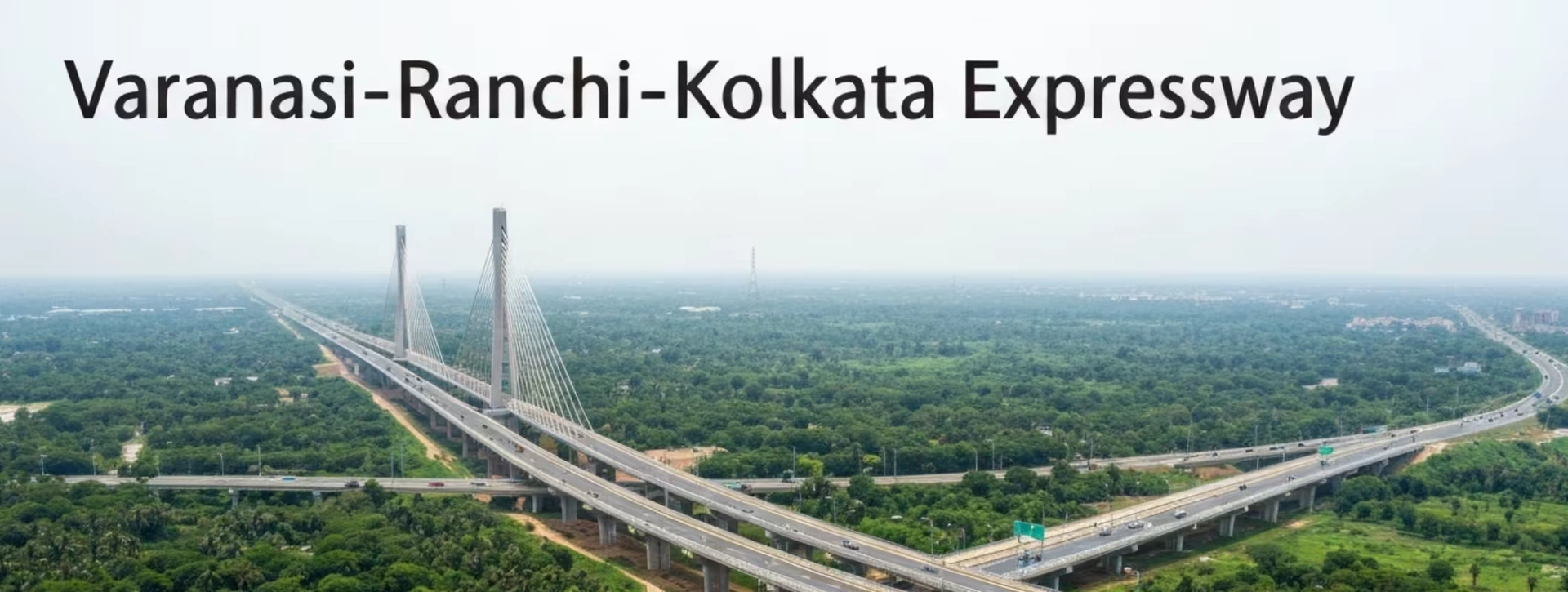
The Varanasi-Ranchi-Kolkata Expressway is one of the most important upcoming infrastructure projects in eastern India. The project is intended to improve high-speed highway connections across Uttar Pradesh, Jharkhand, and West Bengal; this expressway will have a significant impact on the value of land and real estate development, industrial corridors, and land change along the route.
When it is completed the expressway will cut down the time of travel, improve the flow of freight, and open possibilities for property investments commercial townships, residential towns and logistics hubs across various districts.
Overview of Varanasi-Ranchi-Kolkata Expressway
The expressway proposed is intended to connect Varanasi which is a significant religious and economic centre, to Ranchi, which is the capital of Jharkhand as well as Kolkata which is the main commercial center in eastern India. This project is part of India's overall highway and corridor of economic strategy.
Key Highlights
- High-speed, controlled access expressway
- A boost to the cost of land and development of infrastructure
- Better connectivity to agriculture, mining and other industries
- Greater trade flow between states of the eastern part
Proposed Route of the Expressway
The Varanasi-Ranchi-Kolkata Expressway route is planned to pass through multiple districts, opening up vast stretches of rural and semi-urban land for development.
Major Regions Covered
- Uttar Pradesh: Varanasi and the land parcels surrounding it
- Jharkhand: Ranchi, Bokaro, Dhanbad belt (industrial and mining land)
- West Bengal: Asansol region to Kolkata the outskirts
The expressway will be close to government properties, private property and land that is not developed which makes it a major driving force for the future acquisition of land and conversion plans.
Total Length and Design Specifications
- Estimated length: 700-750 km
- Lanes 4-to-6 lanes (expandable)
- Design speed 120 km/h
- Type: Expressway with access control
The plan incorporates service roads, interconnectors, flyovers and interchanges and buffers for land, which ensure an efficient flow of traffic as well as optimal land use.
Land Acquisition and Real Estate Impact
Land Acquisition Scope
The vast majority of terrain along the highway corridor are expected to become available to be used for:
- Main carriageway
- Service roads
- Toll plazas
- Logistics and industrial zones
The agricultural and non-agricultural land will be purchased in accordance with guidelines for compensation which are based on the value of the market.
Impact on Land Prices
- Rapid appreciation of the value of roadside land
- The demand for commercial property has increased close to interchanges
- The growth of industrial plots warehouses, logistics, and industrial parks
- Greater value of residential land in towns close by
The landowners on the route proposed are receiving more inquiries from investors, developers, and infrastructure companies.
Project Cost and Investment Details
The estimated cost of the Varanasi-Ranchi-Kolkata Expressway is expected to run into tens of thousands of crores, covering:
- Compensation for land acquisition
- Engineering and construction works
- Tunnels, bridges, and interchanges
- Infrastructure for safety and tolls
This huge investment will directly impact the monetization of land, usage of land, and private sector participation in the region.
Current Status of the Expressway Project
At present, the expressway is currently in different stages.
- Route alignment planning
- Ease of use and DPR preparation
- Surveys of land and soil tests
- Social and environmental impact assessments
Certain sections may be moved faster subject to land availability or terrain conditions and the local approvals. The project is anticipated to be completed in stages and the acquisition of land being an important step.
Economic and Land Development Benefits
For Agriculture and Rural Land
- Access to markets for agricultural products
- Value of farmland has increased close to expressway exits
- Opportunities for Agro-based Industries or cold storage systems
For Industrial and Commercial Land
- Industrial corridors are being developed.
- Demand for warehouse land is high and logistics parks
- The growth of commercial hubs in close proximity to Toll plazas
For Residential Land
- New townships and housing developments
- Developments that are plotted to be built near expressway junctions
- Better connectivity and improved quality of life
Employment and Regional Growth
The expressway will result in:
- Direct employment in land development and construction
- Indirect work in transportation, real estate warehouses, retail
- The long-term growth of the economy for owners as well as local businesses
This infrastructure development will convert large areas of land that are unutilized into investment zones of high-potential.
Challenges Related to Land and Execution
However, despite its positives it could also be faced with challenges, such as:
- Land acquisition delays
- Negotiations for compensation with landowners
- Environmental clearances
- Coordination between multiple states
Achieving efficient land management and clear processes are essential to a timely finalization.
Future Outlook
The Varanasi-Ranchi-Kolkata Expressway is expected to become a backbone for eastern India's transport network. In time it will change the land use patterns as well as the demand for real estate and the planning of infrastructure across three states.
For farmers, land-investors, developers, businesses, and landowners the expressway is an opportunity for the future, fueled by accessibility, connectivity, as well as economic expansion.
Conclusion
The Varanasi-Ranchi-Kolkata Expressway is more than just a road project-it is a catalyst for land transformation, regional development, and investment growth. With growing interest in the expressway's vicinity to industrial plots, commercial properties, this project is poised to change the economy of the eastern region of India in the near future.
Frequently Asked Questions (FAQs) - Varanasi-Ranchi-Kolkata Expressway
1. What is the Varanasi-Ranchi-Kolkata Expressway?
The Varanasi-Ranchi-Kolkata Expressway is a proposed high-speed, access-controlled road corridor connecting eastern Uttar Pradesh, Jharkhand, and West Bengal. The goal of the project is to enhance long-distance connectivity, cut travel time, and encourage regional development. It is anticipated to play a significant contribution to increasing the value of land and real estate activities, and industrial development in the region along its alignment.
2. The expressway will pass through which states, regions and areas? travel through?
The expressway will run across Uttar Pradesh, Jharkhand, and West Bengal, connecting Varanasi to Ranchi and then Kolkata. Along the route it will encompass various districts that contain agricultural land parcels, rural land industrial zones, and emerging urban areas. This makes it crucial to the development of land and investments.
3. How will the expressway affect the cost of land along the expressway?
The prices of land on the corridor of expressways are likely to rise substantially, particularly close to intersections, service roads, and exit points for entry. Land that is agricultural close to the expressway could see growth due to the potential for conversion as well as industrial and commercial land is likely to draw more attention from logistics firms, developers and manufacturing facilities.
4. Are there plans to acquire agricultural land to construct the expressway?
Yes, a large part of the land needed for the expressway could include agricultural land together with government and non-agricultural land. Land acquisition will be in line with the applicable compensation guidelines and, in many places farmers could be able to benefit from a higher valuation of their land and development opportunities in the future.
5. What kind of land is the most suitable to invest in close to the expressway?
Land parcels that are located near expressway exits, junctions, toll plazas, as well as service roads are thought to be the best suited to invest in. These areas are perfect for parcels for warehouses and logistics hotels, petrol stations and residential developments. Land that is not developed near towns growing can also provide long-term appreciation.
6. What will the expressway do to the development of real estate?
The expressway is expected to encourage the creation of townships for residential use and plotted housing developments as well as industrial estates and commercial hubs. Better connectivity speeds up travel and also attracts business which leads to a higher need for property and properties. As time passes, expressway-linked zones often become real development corridors.
7. What impact will the expressway have on farmers and landowners in the local area?
Landowners, farmers and the local community could gain from fair compensation, better roads, and a higher property value on remaining parcels. Connectivity will allow farmers to access bigger markets more quickly, thereby improving profitability and promoting agricultural-based businesses in the vicinity of the expressway.
8. Is buying land close to the expressway a viable long-term strategy?
Yes, expressway-linked land investments are generally regarded as strong long-term assets. As infrastructure develops, surrounding areas often see steady appreciation. Investors who sale land online or invest early in semi-developed or agricultural land near expressways may benefit from future land-use changes and rising demand, making such locations increasingly valuable over time.